






Tired of your current hairstyle but hesitant to make the chop? Craving a trendy look but worried it might not suit you? A well-designed "butterfly cut" short wig could be your perfect solution. It offers a commitment-free, instant path to the season's most popular layered hairstyle, granting you volume, movement, and modern style while avoiding awkward grow-out phases.
What Is A Butterfly Cut Wig?
The "butterfly cut" is more than just short length; it's a precise layering structure. In wig design, this translates into several core features:
Voluminous Crown & Top: This is the soul of the cut. A quality wig creates a full, rounded silhouette at the crown through internal layering, meticulous trimming, or special cap construction. This instantly adds visual fullness, lifts the roots, and banishes flatness.
Short-to-Long Layers: The hair on the sides and back is sculpted with abundant layers. The shorter upper layers create lightness and movement, while the longer lower layers provide weight and shape. This achieves that signature effect—a blend of inward and outward curves that fan out like butterfly wings to frame the face.
Feathered, Lightweight Ends: The ends are expertly thinned to be soft and flowing, avoiding harsh, blunt lines. This gives the wig incredible dynamism, creating natural texture and bounce with movement, and preventing a heavy "helmet" look.
The value of a quality butterfly cut wig lies in its pre-set design—these elements are built-in, giving you perfect style the moment you put it on.
What Styles of Butterfly Cut Wigs Are There?
The butterfly cut wig has evolved into distinct styles to suit different preferences:
Classic Voluminous: Emphasizes overall fullness and airiness through evenly distributed layers. The ends often feature a soft inward curve, creating a sweet, gentle, and universally flattering effect—ideal for softening round or square jawlines.
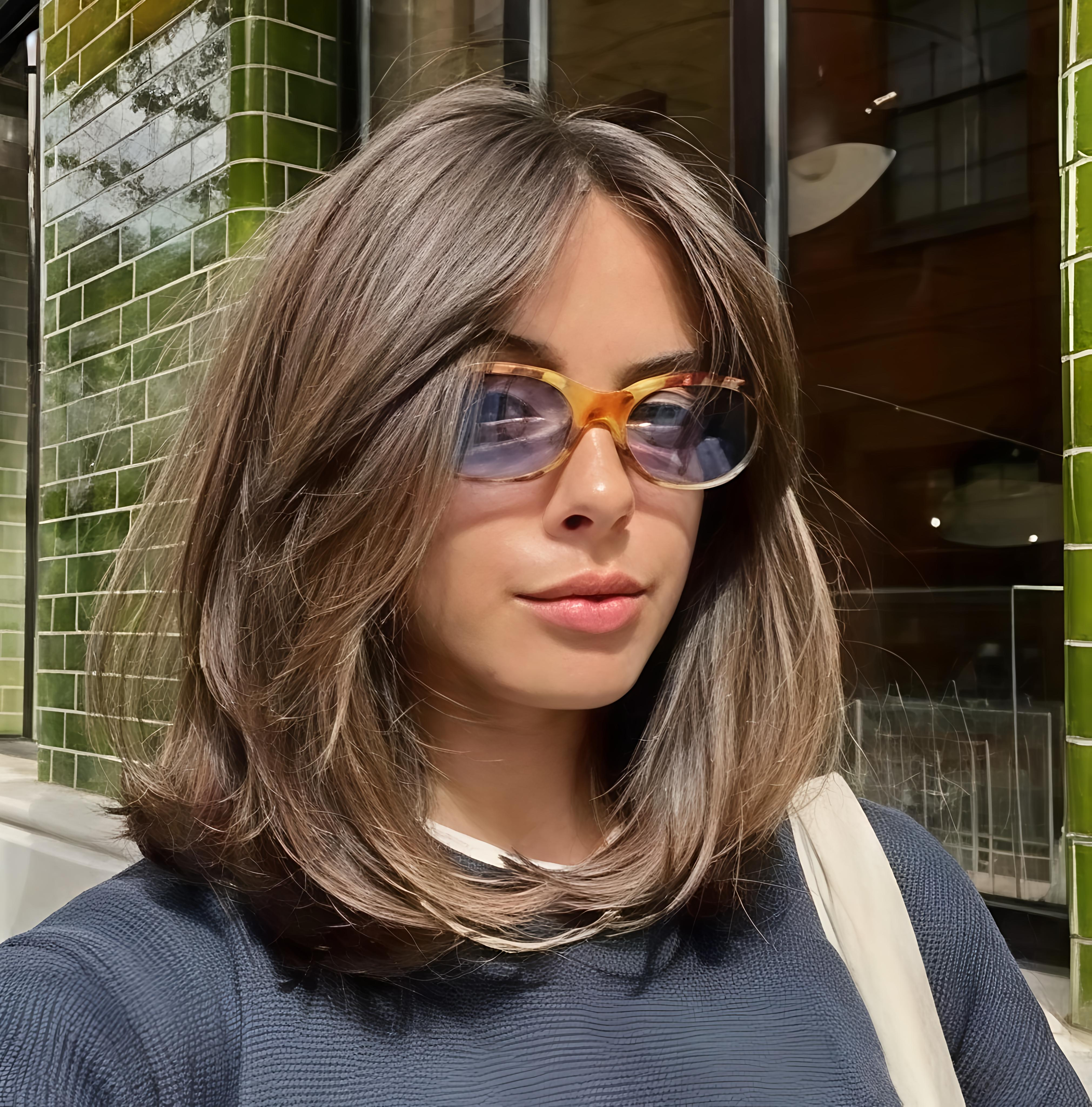
Playful Flipped-Out: Builds on the classic but features a more pronounced outward flip at the ends of the top layers. This style is cheekier, more fashion-forward, and carries a hint of retro charm, adding unique personality to any outfit.
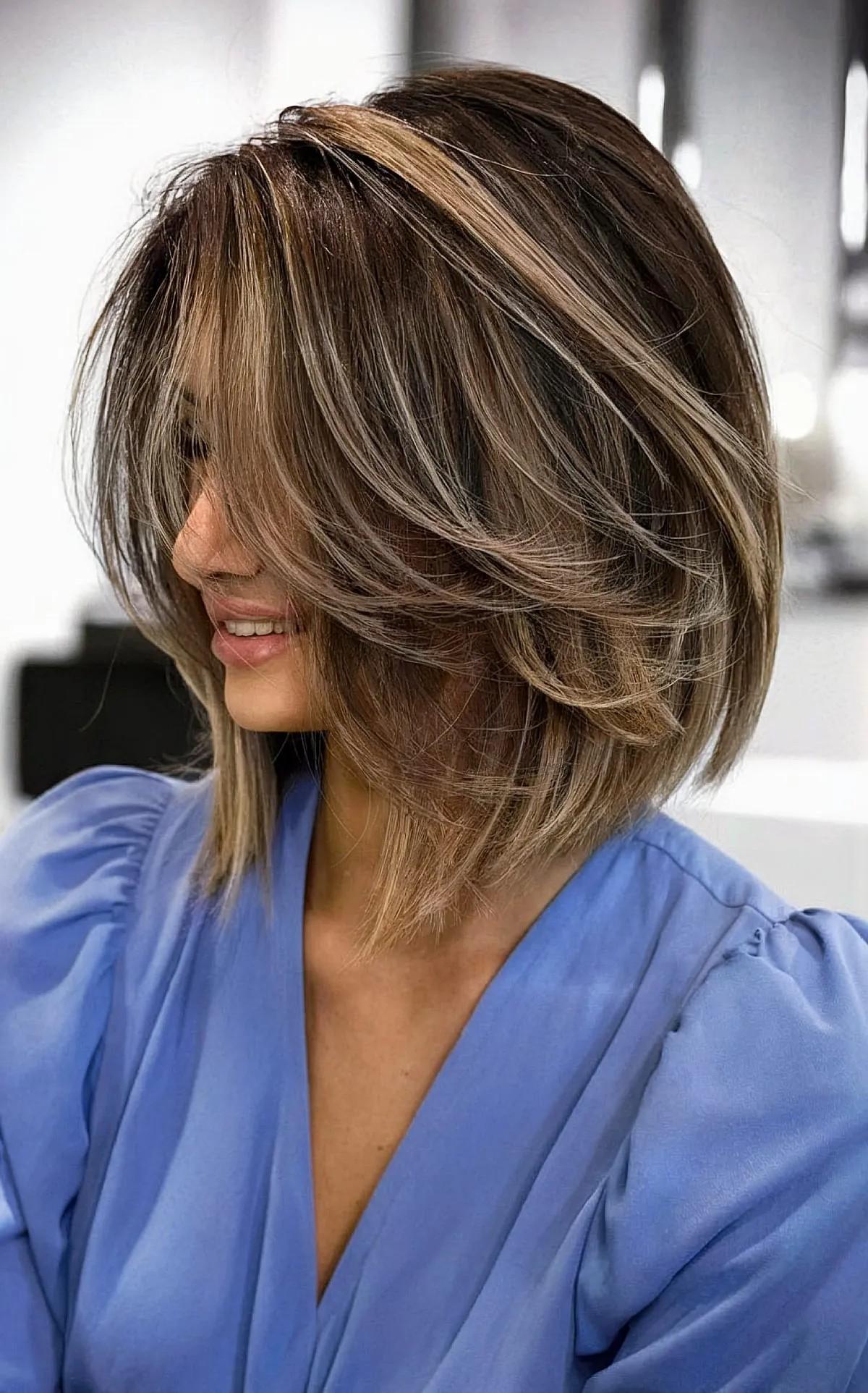
French Fringe Version: Paired with a classic French fringe or curtain bangs. The fringe itself is also layered and seamlessly blends with the voluminous crown, perfectly contouring the face for that effortless, chic, and romantic Parisian vibe—great for highlighting your features.
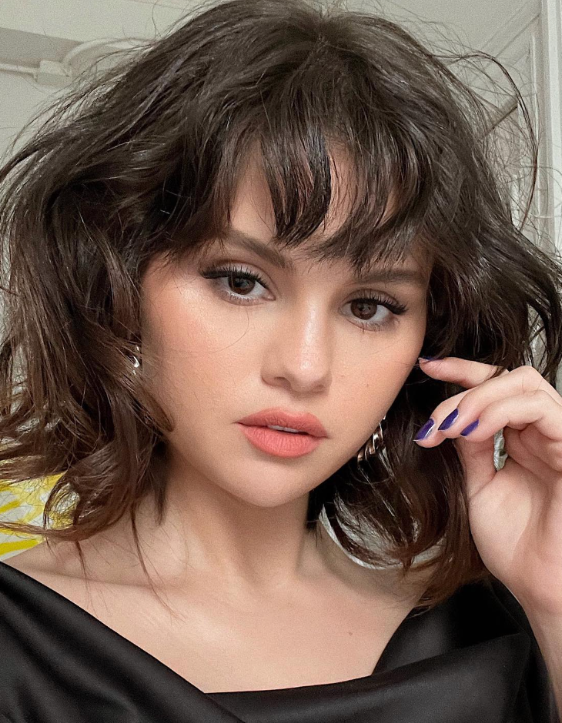
Layered Lob with Curtain Bangs:This layered look sends us back to the'90s-inspired aesthetic with its voluminous waves brushed away from the face. Add a touch of a root-lifting spray for added height, and you're ready to rock!

Softly Layered Center-Parted Crop: With added movement and elegance, the hairstyle brings softness, freedom, and lightness to your locks. If your hair feels a bit heavy, ask for this softly layered crop to remove the bulk and make the tresses pop with volume.
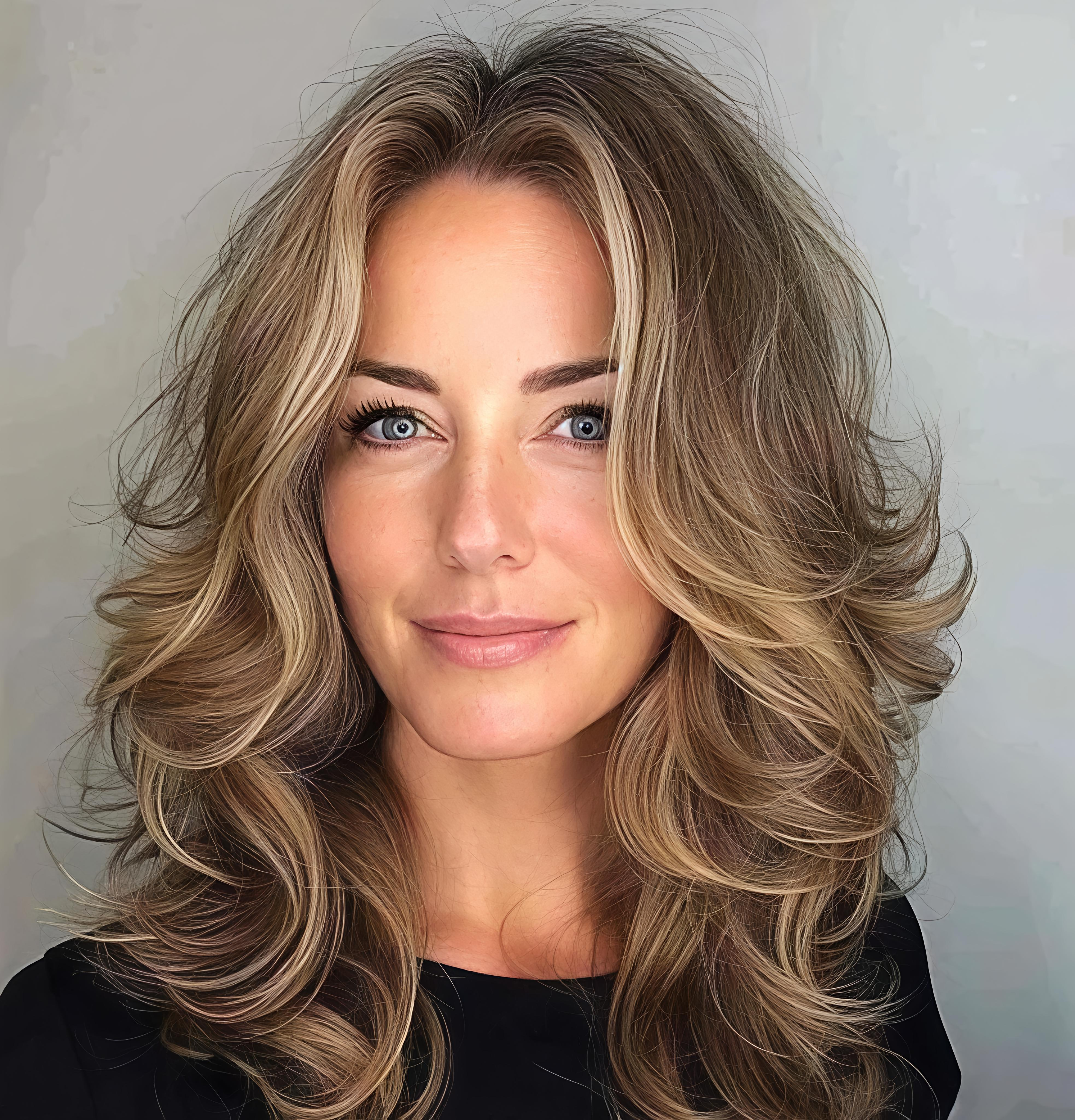
Textured Butterfly Bob: This layered bob enhances your natural hair texture while adding fullness at the sides. For styling, use a round brush when blow-drying to maximize volume and create dynamic movement.
Beyond The Shape: The Butterfly Cut's Dynamic Edge
They are related, but their core goals and final effects are distinctly different. Think of it this way: The classic Bob is about form and shape, while the Butterfly Cut is about movement and texture.
Here's a breakdown of the key differences:
|
Feature |
Bob Wig (Classic/Inward Bob) |
Butterfly Cut Wig |
|
Core Concept |
Emphasizes shape, weight, and a clean line. It aims for a defined, solid silhouette (blunt, A-line, or straight). |
Emphasizes layers, airiness, and dynamic texture. It uses a precise "short-to-long" layering to create movement, not a static shape. |
|
Silhouette & Line |
The line is relatively solid and heavier. Ends are typically blunt or have a defined inward curve, creating a closed, weighted hemline. |
The line is broken and lightweight. Ends are deeply layered and feathered, with a mix of inward and outward curves. The hemline is open and airy. |
|
Crown & Top Volume |
The top is often flatter, with focus on the shape at the sides and back. Root volume depends on the wearer's hair or wig construction. |
This is its soul. It intensely focuses on a voluminous, rounded crown. Built-in layers or construction create a "high crown" effect that visually adds fullness from the roots up. |
|
Movement & Texture |
Relatively static. The style comes from a smooth curve or neat bend; it moves as one solid piece. |
Highly dynamic. The layers themselves create natural texture and bounce. Different lengths move independently with motion, creating a lively effect. |
|
Style Keywords |
Classic, elegant, retro, neat, sleek, sophisticated. |
Trendy, lived-in, airy, youthful,灵动 (lively), modern, effortless chic. |
|
Main Flattering Effect |
Primarily frames the jawline and neck, balancing the face with its length and shape. |
Full-face contouring. The high crown balances the upper face/head shape, the layers soften the mid-face (cheekbones), and the light ends soften the jawline. It offers stronger wrapping and framing. |
|
Solution for Flat Hair |
Limited. If the wig top isn't voluminous, it can still look flat at the roots. |
A core advantage. It is designed specifically to combat flat crowns, providing instant lift and a full head shape. |
How to Choose Your Perfect Butterfly Cut Wig?
Focus on these key aspects to find your ideal match:
1.Cap Construction: Choose a breathable cap with adjustable straps for a secure, comfortable fit. For the most realistic look, prioritize wigs with hand-tied ventilation or scalp simulation, which mimic natural hair growth.
2.Hair Type: For the ultimate in realism, styling versatility, and longevity, opt for a human hair wig. You can heat-style, dye, or perm it (with professional guidance) for different looks. While it requires more care and investment, it offers unmatched authenticity compared to synthetic options.
3.Length & Density: For first-time wearers, a collarbone-length is most manageable. Choose a medium density (130%-150%) to best showcase the butterfly cut's airy, layered texture. Higher densities can look bulky and unnatural
4.Style Match: Select a style that complements your face shape, daily life, and personal image. If unsure, the Classic Voluminous style is a versatile and flattering starting point for most.
Conclusion
A butterfly cut short wig is more than an accessory; it's an instant "style accelerator." It frees you from hair constraints, allowing you to switch effortlessly between polished and playful. Whether for a special occasion or simply to refresh your everyday look, choosing a well-made butterfly cut wig is one of the simplest, most exciting ways to embrace a new you. Find your "butterfly cut" today and start a new style chapter.
FAQ
Q: What is the difference between a butterfly haircut and a layered haircut?
A butterfly haircut is a specific type of layered cut designed to create face-framing pieces. Traditional layered haircuts, on the other hand, encompass a range of techniques and can vary from subtle to dramatic without necessarily achieving the distinct "butterfly" effect.
Q: Which face shape suits a butterfly haircut?
The butterfly haircut is flattering for most face shapes, particularly oval, round, and square faces.
Q: Which is better, a wolf cut or a butterfly cut?
The choice depends entirely on your style preference. The wolf cut is edgy, choppy, and inspired by shag hairstyles, while the butterfly cut is softer, layered, and focused on creating volume.