






When it comes to hair trends, we can't help but marvel at the creativity of hairstylists, who always manage to surprise us. In recent years, one of the most popular trends has been "Money Pieces." This stylish touch adds an unexpected twist to any overall look, making it a worthwhile experiment in your hairstyle choices. In this blog, I will delve into what "Money Pieces" are, how to achieve them, how to care for them, and why they've captivated the beauty and fashion world.
What Are Money Pieces?
"MoneyPieces" (also known as "facial highlighting") refers to the luxurious and glamorous look that can be achieved through this method. "Money pieces" refer to the two front hairs that usually refer to the face and highlight these areas in a highlighted or dyed way. The highlight color of these facial touch-ups may be lighter than the rest of your hair, creating a stunning contrast that highlights your facial features. This coin can be personalized to your liking, making it a versatile fashion that suits a wide range of hair colors and hairstyles.
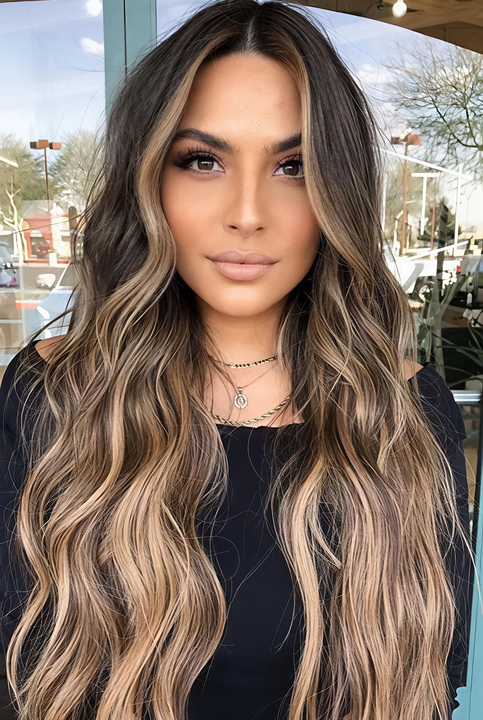
What Is Another Name For Money Piece Hair?
Another name for money piece hair is face-framing highlights, but it's also called color blocking, halo highlights (for thicker versions), or sometimes the Million Dollar Piece, all referring to the technique of lightening the strands right around the face for brightness and dimension.
Money Piece Vs. Traditional Highlights: Key Differences
Here’s a comparison table outlining the key differences between Money Piece highlights and Traditional Highlights.
|
Feature |
Money Piece Highlights |
Traditional Highlights |
|
Focus |
Face-framing. A bold, concentrated lightening of the front sections. |
Overall dimension. Scattered lightening throughout all hair sections. |
|
Placement |
Targeted & graphic. Thick, intentional slices at the very front/hairline. |
Widespread & blended. Dispersed pieces from roots to ends across the head. |
|
Look |
High-contrast & modern. Creates an intentional, statement-making effect. |
Soft & natural. Mimics sun-kissed, natural-looking brightness. |
|
Maintenance |
Lower. Intentional contrast makes regrowth less obvious; longer between touch-ups. |
Higher. Scattered roots show regrowth faster; requires more frequent touch-ups. |
|
Styling |
Style-dependent. Most visible with hair down, parted, or half-up; can be hidden. |
Always visible. Dimension is noticeable in almost any hairstyle, up or down. |
|
Best For |
A bold, low-commitment update. Ideal for dark bases or adding a focal point. |
Classic, all-over brightness and dimension. Great for a natural look or gray blending. |
Are Money Pieces Still In Style 2025?
The money piece is no longer a fleeting trend; it has become a modern hair coloring staple. Think of it like balayage—it transitioned from a hot trend to a fundamental technique in every colorist's arsenal. The intent has shifted from a stark, statement-making contrast to a softer, more strategic method of face-framing and brightness.
Key Evolution in 2025:
|
The New Look (2025) |
The Old Look |
|
Softer & Smokier: Seamless, blended transition using root melts and tonal shadowing. |
Harsh & Solid: A stark, chunky blonde block on dark hair. |
|
Colorful & Tonal: Bronde, copper, rose-gold, and other flattering shades beyond just blonde. |
Blonde-Only: Focused exclusively on high-contrast platinum or blonde. |
|
Custom & Lived-In: Placement tailored to face shape for a more natural, "curtain" effect. |
Generic & Bold: Standardized, thick front slices. |
|
Integrated: Acts as the "highlight of the highlights," woven into the overall color design. |
Isolated: A standalone block of color, disconnected from the rest of the hair. |
|
Healthy & Dimensional: Prioritizes glossy hair with multi-tonal depth. |
Often Flat: Could sacrifice health and dimension for stark contrast. |
What Face Shape Suits Money Piece Hair?
The money piece (face-framing highlights) can suit anyone. The key is customizing placement, width, and blending.
Oval: Most versatile. Can pull off any style, bold or soft.
Round: Create length. Use a V-shape or staggered placement, keep highlights narrower at temples, and opt for blended ribbons.
Square: Soften angles. Choose diffused, wispy highlights (like curtain bangs) and avoid harsh geometric lines.
Heart: Balance a wider forehead. Use a wider, blended piece that starts below temples and carries color down to the jawline.
Long/Rectangular: Add width. A thicker, horizontal highlight starting high on the part line works best. Pair with waves.
Diamond: Soften cheekbones, widen forehead/jaw. Focus light at the front hairline and chin, blending at the cheekbones.
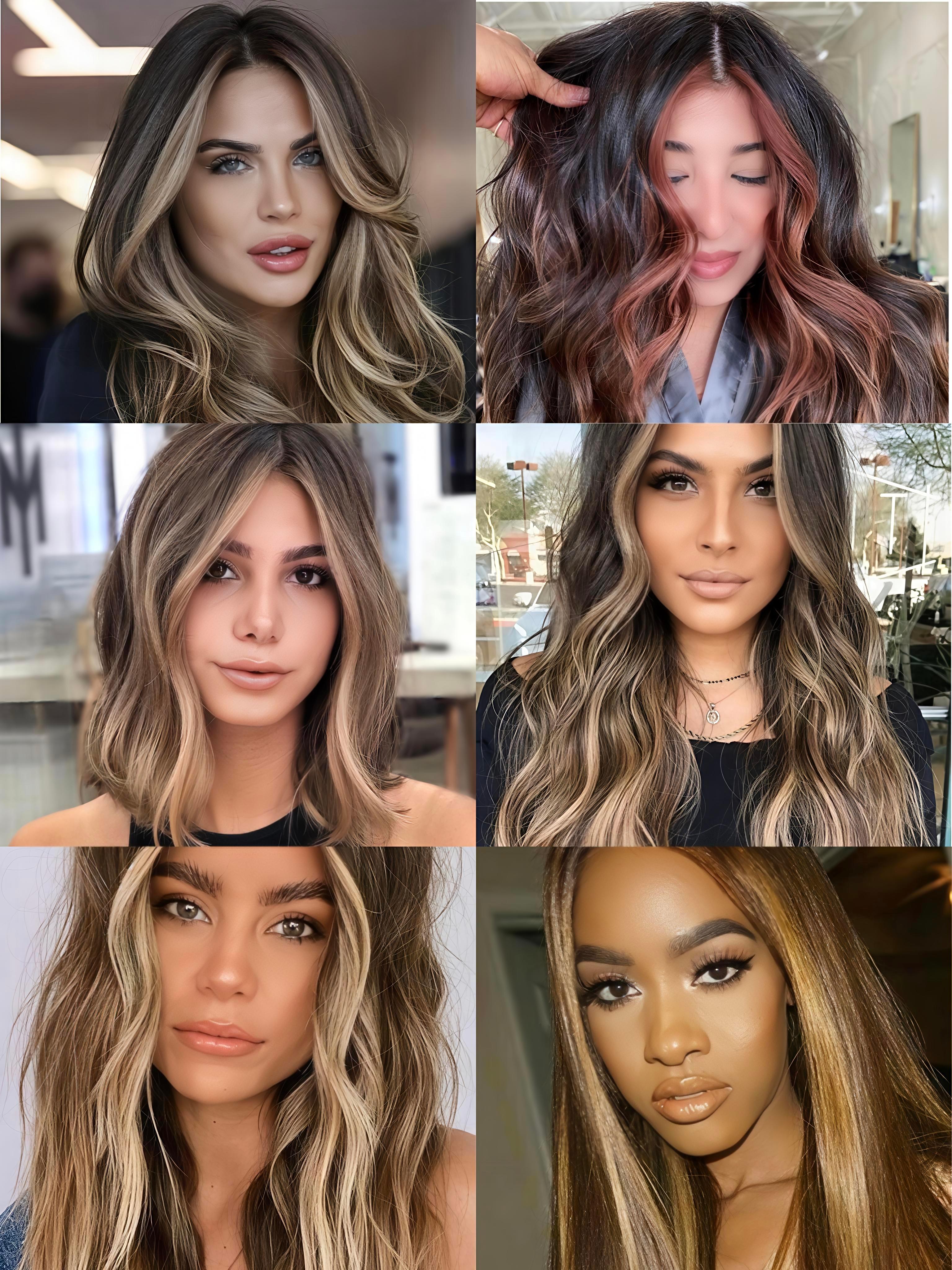
How To Choose Your Perfect Money Piece Shade?
The key is harmony between the shade, your base hair color, and your skin's undertones.
1. Match to Your Base Color
For Dark Brown/Black Hair
Classic: Platinum or icy blonde.
Softer: Caramel or honey.
Edgy: Silver or ash blonde.
For Brown Hair:
Natural Pop: Golden blonde or beige blonde.
Trendy: Rose gold or peach.
For Blonde Hair:
Go 1-2 shades lighter (e.g., to champagne) or switch tones (warm to cool).
For Red/Copper Hair: Choose bright golden blonde or copper. Avoid ash tones.
2. Flatter Your Skin's Undertones
Cool Undertones: Choose platinum, ash brown, or cool beige.
Warm Undertones: Choose honey, caramel, or golden copper.
Neutral Undertones: You can pull off both warm and cool shades.
3. Decide on the Contrast & Vibe
High-Contrast: Go 3+ levels lighter than your base (e.g., dark brown to platinum).
Medium-Contrast: Go 1-2 levels lighter (e.g., dark blonde to light golden blonde). More natural and low-maintenance.
Fashion Colors: Pink, blue, etc. Best on pre-lightened hair.
How To Style & Maintain Money Piece Hair?
Keeping your money piece bright and shiny doesn't have to be difficult, you just need a few hair care essentials to keep the color from fading. Wash your hair with a color-protecting shampoo and conditioner to strengthen the dyed color and prevent fading. Apply a hair mask to your hair 1-2 times a week to further protect your hair and reduce breakage with regular use. Use thermal protection when using modeling tools. If you plan to blow every day to maximize your spending, be sure to spray it with heat protection before styling. It contains complexes and moisturizers that protect your strands and prepare them for a full look.
|
Quick-Reference Maintenance Checklist |
|
|
Do's |
Don'ts |
|
✅ Use purple/blue shampoo weekly |
❌ Wash with hot water |
|
✅ Apply heat protectant EVERY time |
❌ Over-use heat tools on high settings |
|
✅ Schedule regular glossing appointments |
❌ Go in chlorine/sun without protection |
|
✅ Use deep conditioning masks |
❌ Use heavy conditioners on lightened roots |
|
✅ Style with cool air when possible |
❌ Wait until it's completely brassy to tone it |
What Is The Difference Between Face Framing And Money Piece?
|
Feature |
Face-Framing Highlights |
Money Piece |
|
Description |
Subtle and blended; creates a natural, sun-kissed glow by softly blending lighter pieces around the entire perimeter of the face. |
Bold and statement-making; concentrates color on the front-most strands, creating a high-impact, often chunky look. |
|
Visual Effect |
Delicate and natural. Provides a brightening, soft illumination around the face. |
High-contrast and dramatic. Typically much lighter than the base color, drawing immediate attention to the face. |
|
Placement |
Evenly distributed around the entire perimeter of the face. |
Focused on the very front sections of hair, often starting right at the root. |
|
Application |
Uses a softer blending technique. |
Often uses back-to-back foils for maximum brightness and saturation (per experts like Mirella Manelli). |
|
Versatility |
Can be subtle, dramatic, or customized with different colors (e.g., red, copper). |
Primarily defined by its bold, contrasting nature, though color can vary. |
|
Maintenance |
Generally lower maintenance with a softer, more blended grow-out (per Rush Hair & Beauty). |
Requires more frequent upkeep due to the stark contrast at the roots as hair grows. |