





Tape-in hair extensions are semi-permanent extensions that—you guessed it—are applied to your hair with tape. They’re also less expensive than other permanent or semi-permanent options.
And they’re super popular for a reason! Hairstylists love them because they’re easy to apply and remove, and you’ll love them because they don’t require hours at the salon. (You should be in and out within an hour!). With tape-in extensions, you can wear your hair up without worrying about the tape showing, and they work on all kinds of hair textures and lengths. They’re also lightweight, making them comfortable to wear and a perfect option for anyone with fine hair.
How Long Do The Tape In Extensions Last?
A tape-in extensions will last from six to eight weeks. To make your tape-ins last as long as possible make sure to wash and condition them regularly, don’t sleep on them when they are wet, wrap your hair at night, avoid excess heat styling, and regularly brush or comb them.When applied by a professional stylist and cared for properly, tape-in hair extensions can last up to 8 weeks.
Are Tape In Extensions Bad For Your Hair?
Tape-In extensions are made with waterproof, medical-grade adhesive that is safe to wash, style with heat, and maintain in daily routines. The hair used in the extensions is deeply cleaned, colored, and treated before being made into extensions. Additionally, these extensions are virtually weightless.With Tape-In extensions, the small section of natural hair held between the two extension tapes matches the weight of the tapes themselves, ensuring balanced weight distribution without pulling down or stressing your hair.
Pros & Cons.of Tape In Hair Extensions
Here is a short introductory paragraph to lead into the pros and cons table for Tape-In hair extensions.
Pros of Tape-In Hair Extensions:
|
Pros of Tape-In Hair Extensions |
Cons of Tape-In Hair Extensions |
|
1. Add Volume & Length – Instantly creates fuller, longer hair. |
1. Potentially Visible – Can look unnatural if not installed properly. |
|
2. Minimal Hair Damage – When applied and removed correctly. |
2. Need Proper Tools for Removal – Should be removed professionally. |
|
3. Easy to Care For – Low maintenance compared to some methods. |
3. Require Special Products – Need sulfate-free and extension-safe products. |
|
4. Reusable – Tapes can be replaced and reapplied. |
4. Regular Maintenance Needed – Must be repositioned every 6–8 weeks. |
|
5. Best for Thin Hair – Lightweight and lies flat to the scalp. |
5. Not Ideal for Oily Hair – Oily scalp can weaken adhesive bond. |
|
6. Quick Application – Usually applied within 1–2 hours. |
6. Limited Styling Options – May restrict certain updos or parting styles. |
How Much Are Tape In Extensions?
If you're considering getting tape-in hair extensions, you might be wondering how much they'll cost. The price of tape-in extensions varies depending on the salon you visit, the length and quality of the hair, and other factors.
In general, though, you can expect to pay anywhere from $200 to $600 for a full head of tape-in extensions.
Tape-in vs Sew-In vs. Clip-in Hair Extensions: A Quick Comparison
A comparison of key features for Tape-In, Sew-In, and Clip-In hair extensions.
Want longer, fuller hair but not sure where to start? Tape-in,Sew-In,clip-in extensions are the top choices, here's a no-fuss comparison of their key features—so you can choose with confidence.
|
Feature |
Tape-in Extensions |
Sew-in Extensions |
Clip-in Extensions |
|
Attachment |
Medical tape bonded near roots |
Wefts sewn onto braided cornrows |
Clips that snap onto hair |
|
Installation |
Professional (20-60 min) |
Professional (2-4 hours) |
DIY, instant (5-15 min) |
|
Duration |
Semi-permanent (6-8 weeks) |
Long-term (6-8 weeks) |
Temporary (daily wear) |
|
Damage Risk |
Low-moderate (with pro care) |
High (tension on scalp) |
Lowest (with gentle use) |
|
Maintenance |
Special products, careful brushing |
Difficult scalp washing, careful drying |
Same as natural hair |
|
Versatility |
High, discreet for updos |
Limited, hard to wear up |
High, flexible placement |
|
Cost |
Moderate-high (initial + upkeep) |
High (initial + upkeep) |
Low (one-time purchase) |
|
Best For |
Natural, semi-permanent boost |
Major transformation/protective style |
Occasional use, beginners |
|
Key Note |
Must be professionally maintained |
Risk of traction alopecia |
Not for continuous long-term wear |
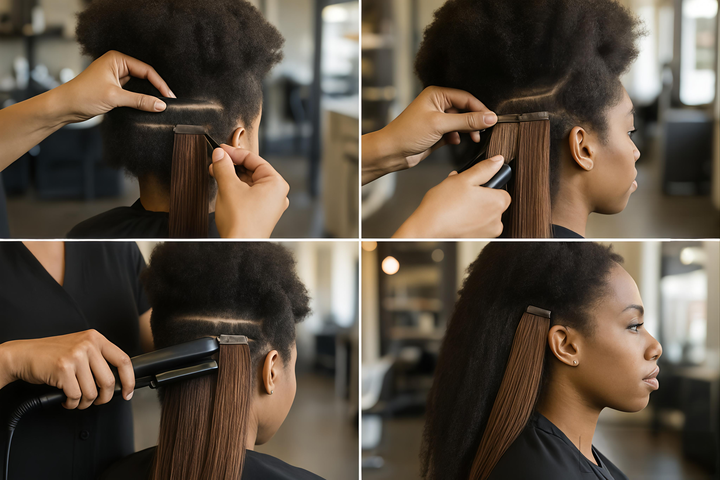
How To Install Tape In Hair Extensions?
The main advantage of tape extensions is that they are quick and easy to apply. They can also be reused multiple times, which makes them a more cost-effective option than some other types of hair extensions.
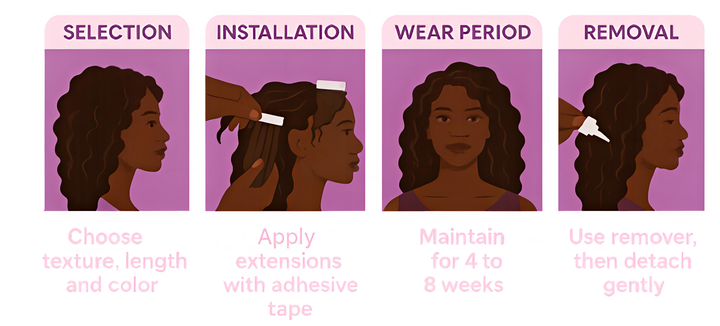
Faq About Tape In Hair Extensions
What’S The Difference Between Tape-In Hair Extensions And Clip-In Hair Extensions?
Clip-in hair extensions (like our unrivaled Clip It) are easy to apply on your own at home.
Tape-in hair extensions (like our stylist-fave Tape It) are a semi-permanent option that needs to be applied by a professional. When applied and maintained properly.
Are Tape-ins Bad for Your Hair?
No! Tape-in hair extensions are NOT bad for your hair. When high-quality hair extensions made with 100 percent real human (aka Remy) hair are applied and maintained properly, they’re completely non-damaging and safe to use.
How Do Tape-in Extensions Feel?
Tape-in extensions are one of the most comfortable kinds of hair extensions on the market (and one of the best ways to put in hair extensions). You might even forget you’re wearing extensions – they’re incredibly lightweight!
How Do I Pick the Right Shade of Hair Extensions?
Our advice: Always buy at least three different Swatch It’s to find that perfect color. The easiest way to pick your shade is to take a color matching quiz. Then, once you get those sample swatches in the mail, head to some natural light to compare the shades and select your ideal blend.