





Have you ever been troubled by these hair problems? Using the wrong products can turn curls into a "frizzy explosion"; fine, soft hair becomes oily and flat just hours after washing; expensive perms lose their shape in a matter of days...
The root of these frustrations often lies in a lack of deep understanding of your own hair. Identifying your hair type is the foundation for choosing the right shampoo, conditioner, and styling products. We will provide a simple and intuitive self-test method to help you quickly determine your position in the hair type classification system.
Understanding The Andrew Walker Hair Typing System
In the field of hair care, the Andre Walker Hair Typing System is a widely used reference framework. Developed in the 1990s by Andre Walker, Oprah Winfrey's personal hairstylist, the system was initially created to promote his own line of hair care products. It categorizes hair into four main types with several subcategories. Although not a strictly scientific classification method, it remains a practical reference standard. Next, we will provide a detailed analysis of different curl patterns and compare their distinctive characteristics using charts.
Hair Type Chart 2025
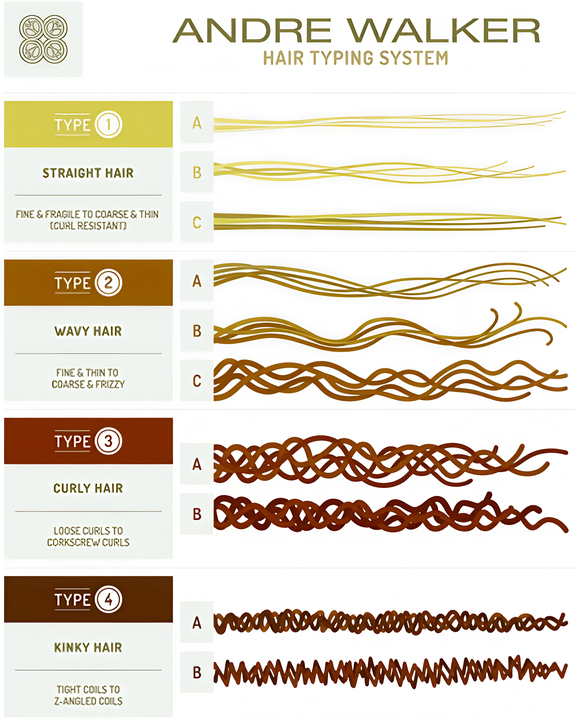
Type 1 to Type 4 - Step-By-Step Self-Diagnosis of Your Hair Type
How to Identify Your Curl Pattern (Types 1-4): After washing your hair, let it air-dry completely without any styling products. Then, observe its natural state and match it with the descriptions below.
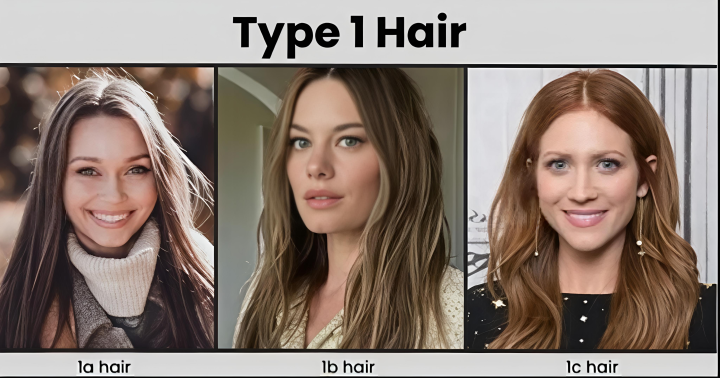
What Is Type 1 Hair?
Characteristics: Completely straight with no natural curl or wave. The hair shaft is smooth and sleek.
The difference between Type 1B and 1C hair types primarily lies in texture and manageability. While they’re both straight hair types, 1B typically has a straight texture with a slight bend to the strands, whereas 1C is thicker, coarser, and has noticeable body and volume. 1B hair types will need to focus on flyaways and tangles, whereas 1C is prone to frizz.
Haircare needs to be tailored to suit individual needs. 1B will benefit from soft waves and layered cuts that aren’t weighed down by heavy products whilst volume enhancing styles are better suited to the thicker strands of 1C hair.
What Is Type 2 Hair?
Characteristics: Forms definite "S"-shaped waves. The hair is straighter at the roots and develops its wave pattern along the length.
Type 2a hair is a “naturally wavy” hair type. It is defined as hair that is straighter than the other curlier types but still has a slight shape to it.
It is divided into three categories depending on the shape of the cortex: type 2a, type 2b, and type 2c hair. Type 2 hair forms an 'S' shape, and the stronger the 'S' shape, the wavier it will be. Type 2a hair is the least wavy, type 2b hair is slightly wavier, and type 2c hair is the waviest without actually being curly.
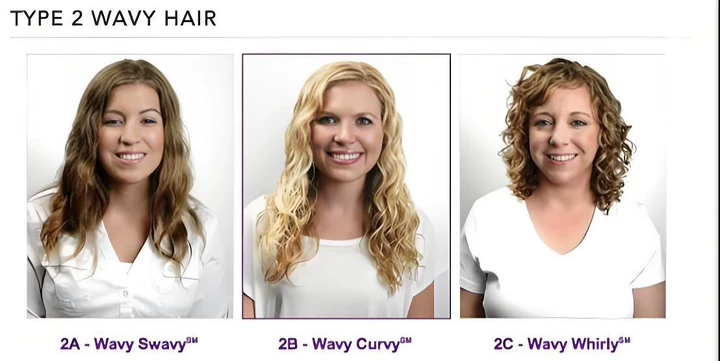
Let's take a look at the differences between 2a, 2b, and 2c hair types:
|
Feature |
2A Hair (Fine, Wavy) |
2B Hair (Medium, Wavy) |
2C Hair (Coarse, Wavy) |
|
Wave Pattern |
Loose, stretched-out "S" shape. |
More defined "S" shape. |
Very defined, tight "S" shapes; some loose spirals possible. |
|
Definition |
Subtle, relaxed waves starting from eye level. |
Clear waves starting from mid-lengths. |
Strong, pronounced waves starting closer to the roots (near the crown). |
|
Texture/Thickness |
Fine strands, hair tends to be flat and thin. |
Medium strand thickness, more body than 2A. |
Coarse, thick strands; hair feels dense and full. |
|
Volume |
Lies flat at the roots; minimal volume. |
Some natural volume at the crown. |
Significant natural volume and body, especially at the roots. |
|
Frizz & Difficulty |
Least frizzy and easiest to manage. Holds styles poorly. |
Moderate frizz (especially in humidity) and manageability. |
Prone to frizz and dryness. Most difficult of the Type 2s to manage and define. |
|
Styling Tendency |
Can straighten easily; waves may fall out. |
Holds waves well but can be straightened with effort. |
Resists straightening; pattern is strong and resilient. |
|
Key Characteristic |
Slight bend, not full waves. |
True tousled beach waves. |
Thick, wavy hair on the verge |
How To Care 2a Hair?
1. Use light products like serums and mousses
Light products like mousses, foams, and serums work best for wavy hair. They will highlight and smooth the wave without adding to buildup.
2. Use products designed for wavy hair
Invest in some frizz-control leave-in products to enhance waves and volumize at the roots
3. Get regular hair cuts
If you have type 2a hair, you should trim it every 10 to 12 weeks since it tends to get out of control without regular attention.
How To Style 2a Hair?
Keeping 2a type hair in its best condition does require some "careful attention," but luckily, it's not difficult to manage. The key to creating the perfect medium-length hairstyle lies in choosing a style that suits your face shape, using lightweight styling products, and occasionally using a curling iron or straightener.Below are a few of our favorite styles for 2a hair.
1. Shoulder length hair
Having shoulder-length hair adds body and highlights your wavy pattern, but may also help you achieve a more full look with flat hair.
2. Soft glam hair
Out of all the other hair types that you can use, you are the most likely to be able to accomplish the glam waves look.
3. Deep side part
If your strands tend to fall flat, give them a boost with a side part. You can create volume in wavy hair with a deep side part and you'll be amazed at how gorgeous it looks.
4. Beach waves
When your 2a waves have had time to air-dry naturally, they often fall perfectly if you have the proper cut and use the right products.
What Is 2c Hair?
In a hair chart, the 2C hair type falls under the wavy category. Type 2C hair has waves that are the widest in diameter among all wavy hair types. It’s just so, so voluminous! Compared to 2A and 2B hair, 2C hair doesn’t get greasy as quickly but is more frizz-prone.
What Is Type 3 Hair?
Characteristics: Displays well-defined, springy spiral curls in an "S" pattern. The curls have good elasticity and volume.Type 3 hair, also known as curly hair, is one of the 4 main types of hair. Sitting somewhere between wavy and coily, type 3 hair can range from loose loopy curls to tight, springy corkscrews. Type 3 hair is one of the three curly hair types and can be further broken down into 3A, 3B, and 3C type hair. These subtypes depend on how tight the curls are. Type 3 hair tends to have some shine but can be prone to frizz.
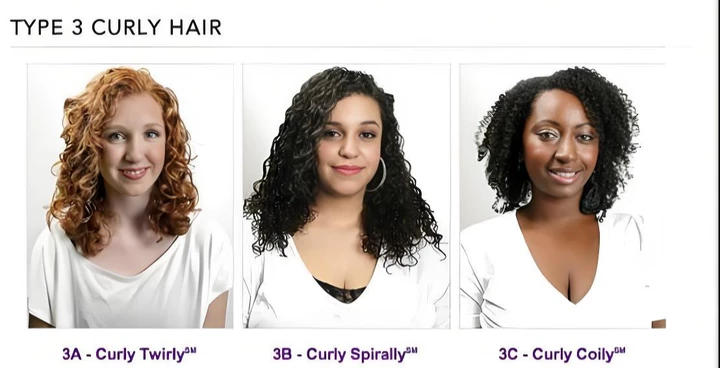
The 3A, 3B, 3C system categorizes curly hair by decreasing curl diameter, increasing density, dryness, and management difficulty. 3A features large, loose ringlets, 3B is known for bouncy, springy spirals, and 3C consists of the tightest, densest corkscrew curls with the most shrinkage.Let's take a look at their differences.
|
Feature |
3A Hair (Loose Curls) |
3B Hair (Tight Curls) |
3C Hair (Corkscrew Curls) |
|
Curl Pattern |
Large, loose, shiny curls. Well-defined "S" shape. |
Bouncy, springy curls ranging from spiral to corkscrew shape. Diameter of a marker. |
Tight, dense corkscrews or very small, springy curls. Diameter of a pencil or straw. |
|
Definition |
High definition with distinct, separated curls. |
Very defined curls that may clump together into larger curl families. |
Extremely defined, but curls can cluster densely, making individual strands hard to distinguish. |
|
Texture/Density |
Can range from fine to coarse. Tendency to be shiny. |
Typically coarse texture with high density (lots of hair). |
Almost always coarse, with very high density and a lot of hair per square inch. |
|
Volume & Shrinkage |
Moderate volume and shrinkage (about 25-30%). |
Significant volume and shrinkage (can be up to 50-60%). |
Maximum volume and dramatic shrinkage (can be 60-75% or more). |
|
Frizz & Dryness |
Prone to frizz, especially in humidity. Can maintain some shine. |
High frizz potential. Tends to be drier; needs consistent moisture. |
Very high frizz potential. Often the driest of the three, requiring intense hydration. |
|
Fragility & Management |
Less fragile than 3B/3C. Easier to detangle and style. |
More fragile due to tighter curl pattern. Requires careful detangling. |
Most fragile and prone to tangling/knotting. Requires gentle, methodical care. |
|
Key Characteristic |
Large, shiny, well-defined ringlets. |
Springy, bouncy, pencil-sized spirals with lots of volume. |
Tight, dense, straw-sized corkscrews with maximum shrinkage and volume. |
What Are The Differences Between 3C Hair And 4C Hair?
Although both 4C and 3C hair are curly, there are some key differences between the two. We have put together a comparison chart to help you better understand and identify your hair type. You can also see some of the key differences between 3C hair and 4C hair below.
|
Category |
3C Hair |
4C Hair |
|
Curl Pattern |
Tightly coiled curls, forming ringlets about the size of a pencil. |
Tightly coiled with little to no defined curl pattern. |
|
Texture |
Soft, springy curls with a well-defined shape. |
Cotton-like texture with a more compact structure. |
|
Shrinkage |
Experiences 50-60% shrinkage when dry. |
Can shrink up to 75% or more of its actual length. |
|
Moisture Retention |
Requires regular hydration but retains moisture better than 4C. |
Highly prone to dryness and requires deep hydration. |
|
Manageability |
Easier to detangle due to defined curls. |
More prone to tangling and requires gentle handling. |
|
Styling Versatility |
Holds styles well, and can be defined with curl creams. |
Versatile for protective styles like braids and twists. |
|
Breakage Risk |
Moderate risk of breakage if not properly moisturized. |
Higher risk of breakage due to its fragile nature. |
1. Curly shape
2. Fragility
While curly hair is generally more prone to drying and breakage, 4C hair is most of the time considered the most fragile hair type.
3. Hair gloss
Type 4C hair tends to have raised cuticles that don't reflect light like other hair types. Therefore, type 3C hair is generally brighter and smoother than type 4C hair.
4. Shrinkage
While both 3C and 4C strands have shrinkage, 4C generally shrinks more. Typically, 3C hair shrinks to around 25-50% of its original length, while 4C strands often shrink by as much as 80% or more.
What Is Type 4 Hair?
Characteristics: Features a tight, zig-zag "Z" pattern that coils closely together. This creates a very dense curl pattern with significant shrinkage.Type 4C hair is the ultimate in tight curls. Boasting a super coily zig zag-pattern, these tight, springy curls are so compact and fine in texture that they create a dense, full-bodied look with a lot of natural volume.
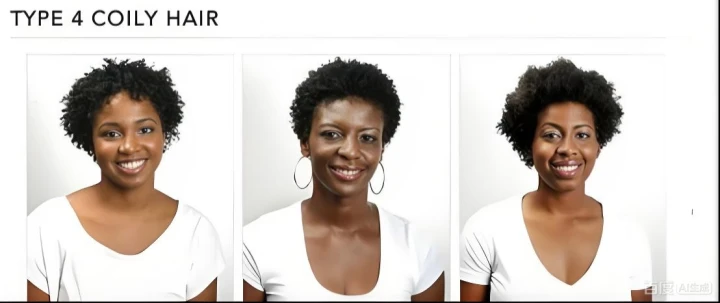
Let's take a look at the differences between 4a, 4b, and 4c hair types:
|
Feature |
4A Hair Type |
4B Hair Type |
4C Hair Type |
|
Curl Pattern |
Defined "S" shaped coils, loose and springy. |
Tight "Z" shaped zigzag coils, less defined. |
Extremely tight, densely packed coils; may appear less defined or almost invisible. |
|
Curl Size |
Similar to a crochet needle or pencil. |
Smaller than 4A, about a pen spring size. |
Very small, from pin-sized to microscopic. |
|
Shrinkage |
High shrinkage (about 30-40%). |
Very high shrinkage (about 50-60%). |
Extreme shrinkage (up to 70-75% or more). |
|
Texture |
Soft, fine to medium density. |
Coarse, dense, and cotton-like. |
Very coarse, dense, and brittle if dry. |
|
Definition |
Curls are well-defined when moisturized. |
Less defined; coils cluster together. |
Minimal natural definition; requires styling for visible curl pattern. |
|
Moisture |
Retains moisture relatively well. |
Tends to dry quickly; needs regular moisture. |
Loses moisture very easily; requires intense hydration. |
|
Fragility |
Less fragile compared to 4B/4C. |
More fragile due to tight bends. |
Most fragile due to tight coils and dryness. |
|
Styling |
Holds styles well; defined wash-and-go. |
Benefits from twist-outs, braid-outs for definition. |
Often styled via twist-outs, braids, wigs, or protective styles. |
|
Common Challenges |
Shrinkage, tangling. |
Extreme dryness, single-strand knots. |
Severe dryness, tangling, breakage. |
|
Recommended Care |
Regular conditioning, light oils. |
Heavy creams, sealing with butter/oils. |
Intensive moisturizing, LOC/LCO method, gentle handling. |
How To Make 4c Hair Curly?
Although you cannot change your natural curl type, there are still some natural methods to make your curls appear more relaxed and voluminous, presenting a naturally beautiful look. If you want to improve frizzy curls without relying on styling products or chemical treatments, the following tips are perfect for you.
1. Stretch Your Hair
Regardless of the method you choose, if you want to loosen 4C spiral curls or 3C curls, the key lies in stretching your hair. Applying appropriate tension to your strands can effectively extend the curl pattern, and the effects of this method usually last until your next wash.
2. Deeply Moisturize Your Strands
No matter the curl type, the healthier your hair is, the shinier your strands and the clearer your curl definition will be. Keeping your hair adequately hydrated is the essential key to tackling stubborn frizzy curl patterns.
3. Heat Styling
Heat styling is one of the controversial methods for softening 4C hair. This technique uses heat to alter the hair’s structure and relax the curl pattern. Although many people view it simply as heat damage, the core difference between the two lies in the intention behind the process.
What Is The Difference Between Type 3 And Type 4?
These two have relatively similar curvature, but there are also noticeable differences.
|
Feature |
Type 3 (Curly Hair) |
Type 4 (Coily Hair) |
|
Shine |
High. The curved strands reflect light more easily. |
Low. Light scatters off the tight zig-zags, making it appear less shiny without proper care. |
|
Strength & Elasticity |
High elasticity. Can stretch and bounce back to its original form without much effort. |
Fragile & Low elasticity. The tight coils create weak points, making it prone to breakage and less stretchy. |
|
Common Concerns |
Frizz, lack of curl definition, dryness, curl collapse. |
Extreme dryness, severe tangling, high shrinkage (can lose up to 70% of length when dry), breakage. |
|
Core Care Needs |
Hydration and curl definition. Using mousses, gels, and light creams to shape curls and reduce frizz. |
Intense moisture and breakage prevention. Requires heavy creams, butters, and sealing oils to lock in moisture. Detangling must be gentle (e.g., finger coiling). |
|
Example Sub-Types |
3A: Loose, shiny spirals. |
4A: Tightly coiled "S" pattern. |
How To Quickly Distinguish Between Type 3 And Type 4 Hair?
You can quickly identify your hair type through these two simple methods:
1. The Stretch Test
Take a single, clean, and dry strand of hair and gently stretch it.
Type 3: The hair will stretch easily and reveal an elastic, spiral structure.
Type 4: When stretched, you will see tight "Z"-shaped zigzags, and the strand will feel more fragile.
2. The Visual Test
Observe your hair's natural state when it's completely dry and free of styling products.
Type 3: If you can clearly see defined, springy curls in your dry hair, it is most likely Type 3.
Type 4: If your dry hair has a very tight, fluffy, or Afro-textured appearance, and you need to separate it carefully to see the tiny coils, it is most likely Type 4.
Summary
In simple terms, the most fundamental difference between Type 3 and Type 4 hair lies in the tightness and shape of the curl pattern:
The essence of Type 3 is the "curl," characterized by curves.
The essence of Type 4 is the "coil," characterized by sharp angles.
FAQ About Your Hair Type:
My Hair Seems To Be A Mix Of Type 2c And 3a. Is This Normal?
Mixed hair types are prevalent! Many people have multiple curl patterns on their heads.
After Perming/Dyeing, Has My Hair Type Changed?
Your inherent curl pattern (type 1-4) remains genetically the same. However, chemical processes significantly alter your hair's porosity and overall health, which changes its behavior and care needs.
How Often Should I Wash My Hair Based On My Type?
Washing frequency depends more on scalp oiliness and hair density, but as a general guide:
Type 1 & 2: May need more frequent washing (e.g., daily or every other day).
Type 3 & 4: Can often go longer between washes (e.g., weekly or bi-weekly) to preserve natural oils.
Conclusion
Knowing your fundamental hair type is the cornerstone of effective hair care. Furthermore, once you identify your natural curl pattern, you can quickly determine the perfect match when shopping for wigs!
We currently offer several popular wig textures that correspond to these types:
For Type 1: Straight Wig,Straight Hair Bundles
For Type 2: Body Wave Wig, Loose Wave Wig,Body Wave Bundles,Loose Wave Bundles
For Type 3: Jerry Curly Wig, Deep Wave Wig, Water Wave Wig,Jerry Curly Bundles,Deep Wave Bundles,Water Wave Bundles
For Type 4: Kinky Straight Wig, Kinky Curly Wig, Yaki Straight Wig,Kinky Straight Bundles,Kinky Curly Bundles,Yaki Straight Bundles